

1. Have a Comprehensive Plan for Your Online Business
Before you delve into the technicalities of building your site, starting with a solid business plan is crucial. This roadmap will guide your decisions as you establish your online store.
Let’s break down the critical components of your plan:
Identify your Niche
If you’re considering how to start an online store, you likely have a product in mind. If not, it’s time to figure that out before you proceed.
Ask yourself: What will you sell, and to whom will you sell it?
Choosing a niche that aligns with your passions can make your journey more enjoyable and sustainable. Your enthusiasm for your products will resonate with your customers, creating a unique and engaging shopping experience.

Image by Dragon Claws / shutterstock.com
Next, understand your target audience and their personas. Identify their needs, preferences, and buying habits. The more you know about your audience, the better you can tailor your products and marketing strategies to them.
Remember, choosing a profitable, searchable niche that aligns with your passion is imperative for success. This ensures a return on your investment and that there’s an active audience looking for your products or services.
Select Your Products
Once you’ve identified your niche, it’s time to decide on the specific product(s) you’ll sell. Clarity about your offerings, whether physical goods, digital products, or services, is key.
Start with a limited catalog to test demand. You can always expand your product range later.
Consider factors like demand, competition, and profitability when selecting your products. If you’re entering a popular market, consider how to differentiate your offerings.
If you’re selling physical products, plan your inventory management strategy. Will you need custom manufacturing, drop shipping, or wholesale purchasing?
Keyword Research
Keyword research helps you understand what potential customers are searching for online, guiding your content creation and SEO strategy. SEO Tools like Google’s Keyword Planner and SEMrush can assist with this research.
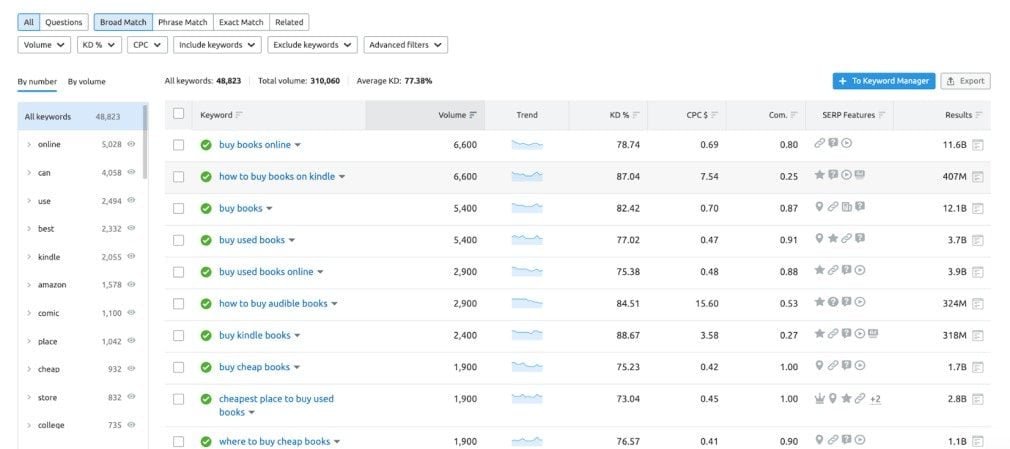
By conducting keyword research, you’ll uncover high-traffic search terms consumers use to find products like yours. Use these insights to optimize your site with SEO content based on the keywords your audience is searching for. You can even use AI SEO tools like Surfer SEO or Jasper to generate and optimize your content for keywords.
Doing so will help your online store rank higher in search engine results, attracting more visitors.
2. Register Your Domain
Before you can create a website, you need to buy a domain. Your domain name is your online store’s address on the web. It should be easy to remember and reflect your brand.

Image by Eny Setiyowati / shutterstock.com
You’ll need to buy your domain from a reputable domain registrar. You want reasonable prices and easy-to-manage domain options. You can’t go wrong with Namecheap or Godaddy. Some hosting providers, like Siteground, will also allow you to pick a domain directly from their platform.
Follow along in our dedicated, step-by-step guide for registering a new domain for a website.
3. Choose an eCommerce Platform
When it comes to eCommerce platforms, two options often dominate the conversation: WordPress with WooCommerce and Shopify. Website builder platforms like Shopify offer an all-in-one solution that can be a great option for many online stores. However, with WordPress powering over 40% of all online stores, it’s worth exploring why this platform, combined with WooCommerce, is a top choice for many.
WordPress + WooCommerce: A Winning Combination
WordPress, the best content management system (CMS) for building websites, offers one of the most flexible options for building an online store. While the platform is free, associated costs include hosting, domain registration, plugins, and themes. However, these costs are often considered a worthy investment, given WordPress’s freedom and ease of use.

Even for beginners, WordPress is a straightforward platform to learn. It’s intuitive, and a wealth of tutorials and documentation are available from various sources to help you navigate any learning curve. Plus, with its comprehensive dashboards and a handy mobile app, you can stay informed about your store’s performance anytime, anywhere.
Customizability with WooCommerce
WooCommerce is the go-to eCommerce solution for WordPress, and it is one of many great eCommerce plugins you can use to enhance your online store. One of the standout features of WooCommerce is its customizability. Whether you’re setting up a small boutique store or a sprawling online marketplace, there are plenty of WooCommerce themes designed to help you create a unique and engaging shopping experience for your customers. You can easily tweak the layout, colors, fonts, and other design elements to match your brand’s aesthetic. There are also some great WooCommerce plugins and add-ons to add more features and functionality to your online store. For those with more technical expertise, WordPress also allows custom code snippets and webhooks for further customization.
Scalability for Growth
As your online store grows, the WordPress and WooCommerce combination can handle increased traffic and content. It’s a scalable solution that grows with your business, ensuring your website can handle the demands of a growing customer base.
With WordPress and WooCommerce, you’re not just building an online store but a platform designed for growth and success.


发表回复
要发表评论,您必须先登录。